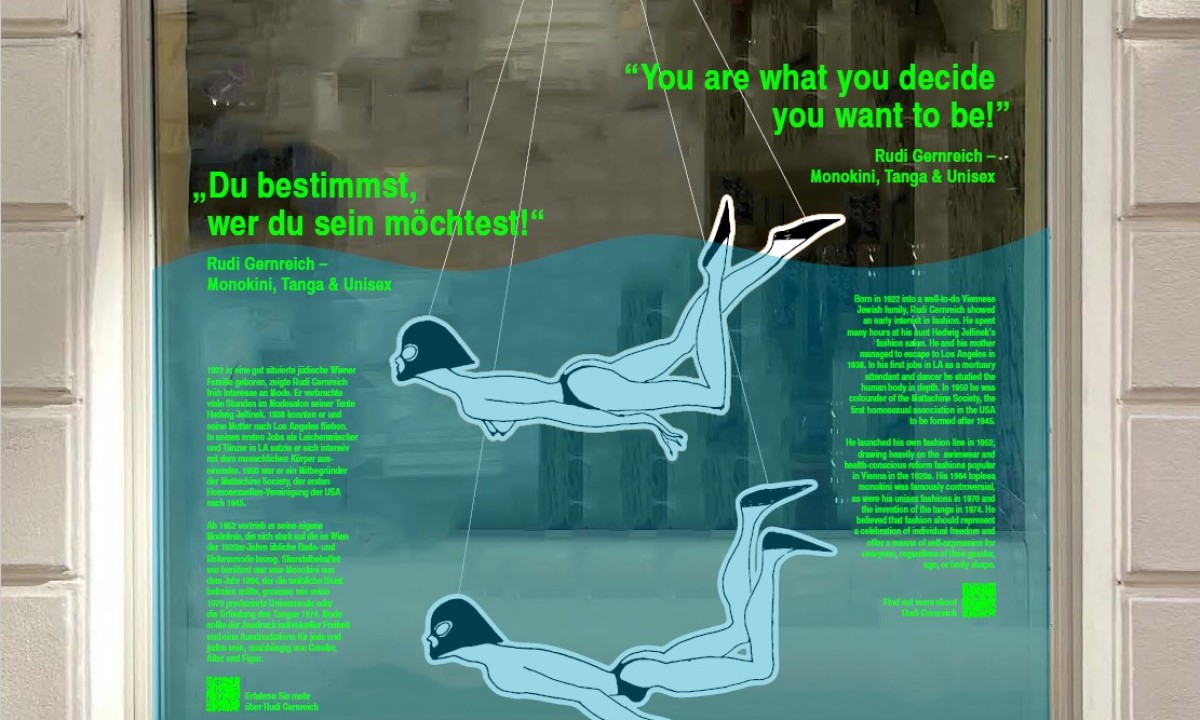
"Gernreich wasn’t a fashion designer; he was a fashion activist!”
Rudi Gernreich, born on August 8, 1922, in Vienna, is regarded today as one of the most influential fashion designers of the twentieth century. While his pioneering ideas - monokini, total look, unisex fashion - were seen as unusual, bold, and scandalous at the time they were invented, they are now part and parcel of the fashion repertoire.
His mother Lisl Gernreich was thirty-nine when Rudi was born, and his father Siegmund Gernreich was director of the Schüller hosiery and knitwear factory. They were a well-to-do family and active supporters of the Social Democrats. The Jewish religion was of secondary importance to them. Rudi attended the celebrated Juvenile Art class founded by the Austrian painter and designer Franz Čižek, whose vibrant colors were to reappear later in Gernreich’s fashions. He also liked to visit his aunt Hedwig Jellinek’s fashion salon, where he would spend hours drawing and discovering the various fabrics.
After the annexation of Austria to Nazi Germany in 1938, the salon was smeared with antisemitic slogans. Hedwig was banned from working and was obliged to close her salon. Lisl Gernreich attempted to sell the family’s house in the Speising district of Vienna. Siegmund Gernreich had already committed suicide in 1930. Franz S., a supporter of the Nazi party since the early 1930s, purchased the house and its contents for a fifth of their value. The sale was not concluded until 1941, and the Gernreichs never saw the proceeds, because they had no access to the frozen account where the sum had been deposited.
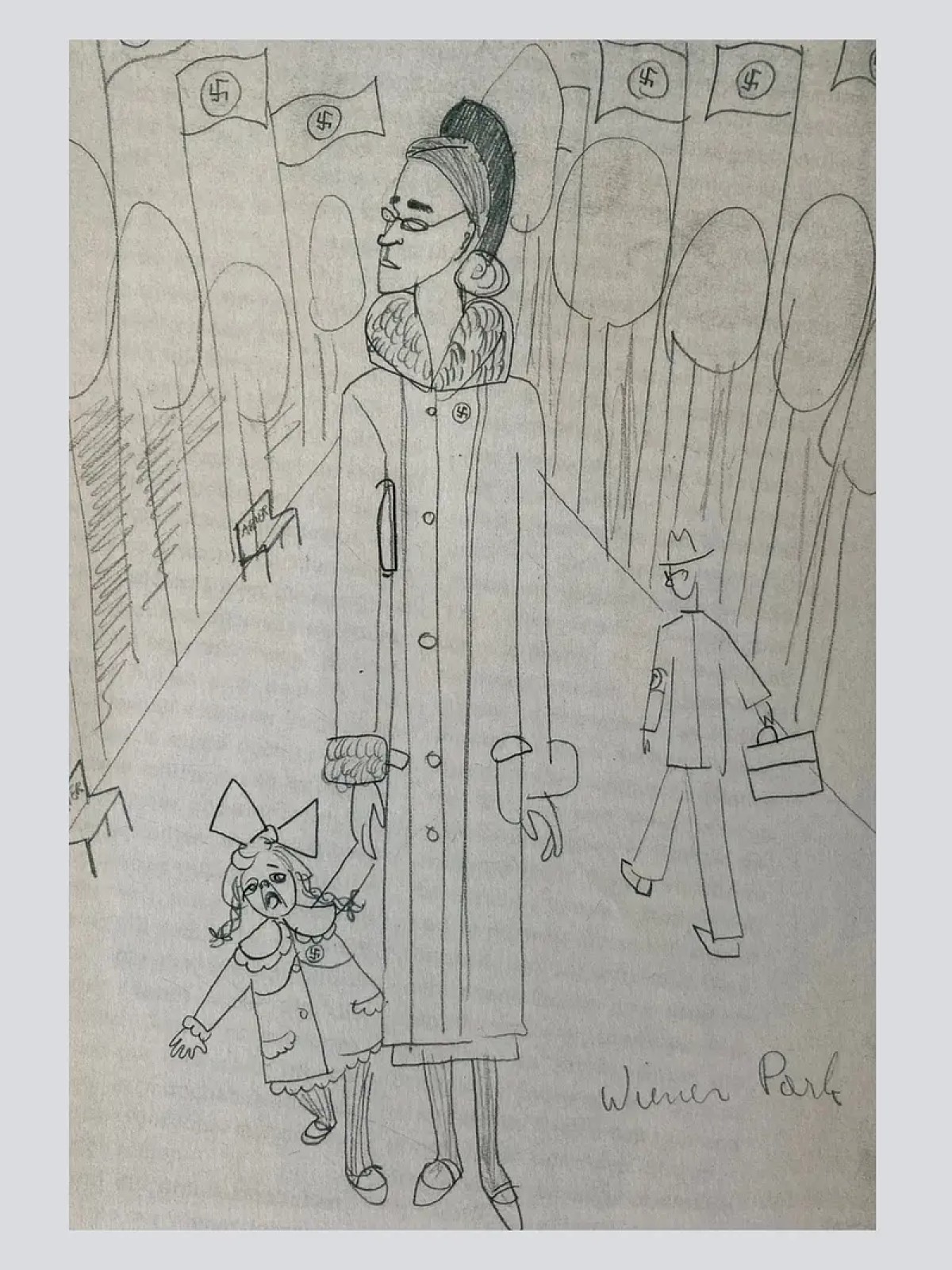
© Rudi Gernreich
Drawing by Rudi Gernreich 1938 in Vienna
Luckily for them, the young Californian couple David and Edith Bogen, who had stayed in 1932 in the guesthouse opened by Lisl Gernreich, were willing to provide an affidavit for Rudi and Lisl. On the Vienna registration form, the field marked “moved to” bears the boldly written entry “Hollywood, USA.”

© WStLA
Registration letter with the move 1938 to Hollywood
From California they succeeded in 1940 in bringing Lisl’s mother Charlotte Müller, her sister Hedwig with her husband, writer Oskar Jellinek, and her brother Georg Müller and his wife Heddy to join them in exile. In 1944 Rudi was granted US citizenship. He lived until 1956 together with all of his Viennese relatives. In his first jobs as mortuary assistant and dancer in the Lester Horton Company in Los Angeles he was able to study the human body at close quarters. He already designed costumes for the dance troupe.
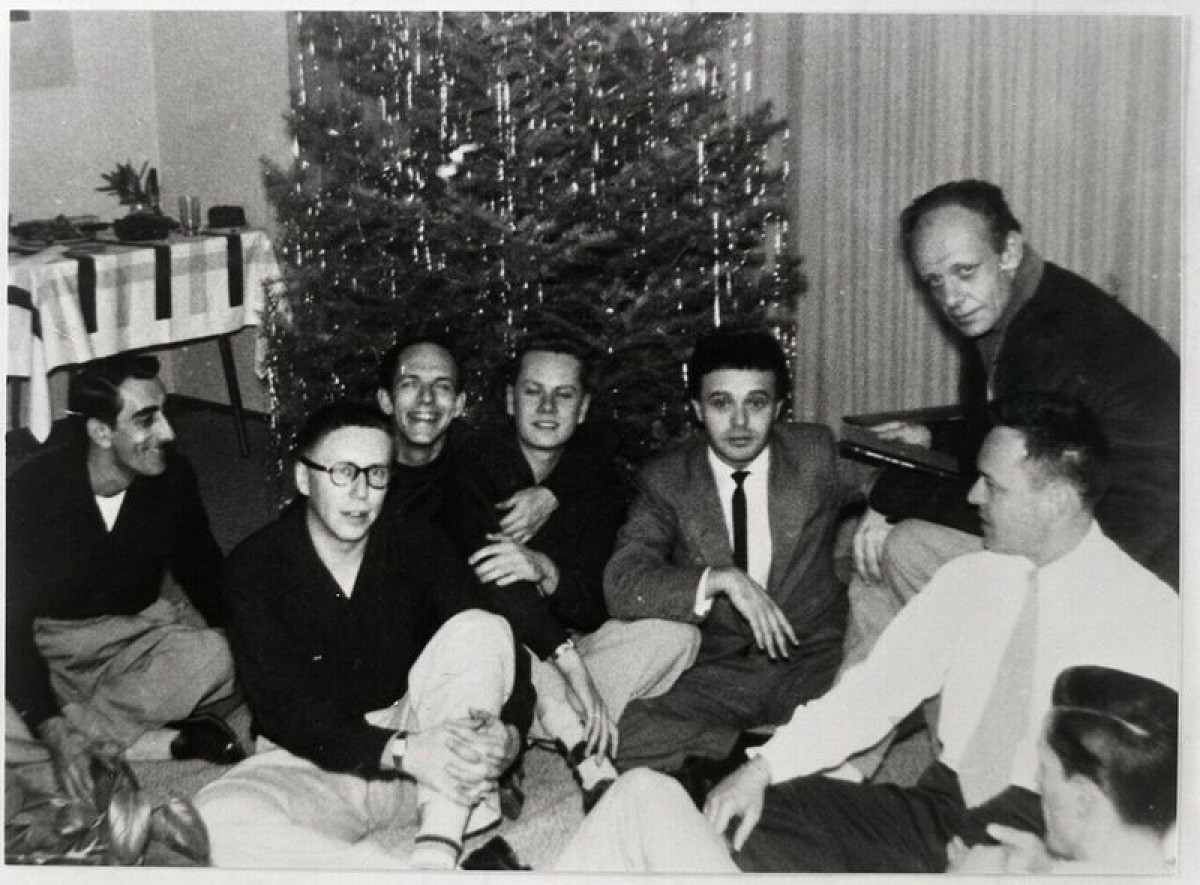
© Jim Gruber
The founders of the Mattachine Society
In 1950 he founded the Mattachine Society in Los Angeles with Harry Hay, his partner at the time. It was the first homosexual society in the USA. He always kept his sexual orientation secret from the public.
He launched his own fashion line in 1952, assisted by other Viennese exiles, including the young Lilly Fonda, who was later to become a leading costume designer for Hollywood’s blockbuster movies.
Rudi saw himself as an artist and was also in close contact with the local art scene. Friends describe him as good-looking, small, and with a typical Viennese sense of humor. He was also extremely hardworking and sensitive.
Unusually for California, he was always dressed in black and was known as the “crazy Viennese in black.” Although he had prominent fans, including Yves Saint Laurent, Issey Miyake, and Tom Ford, Los Angeles was not regarded as a fashion center at the time. Rudi therefore showed his new collections three or four times a year in New York. His runway shows were often designed to surprise. Among his customers were Barbra Streisand, Sharon Tate, Indira Gandhi, and Jackie Kennedy.
His great breakthrough came in 1964 with the invention of the topless women’s swimwear called a monokini. He was inspired by the stretch knit fabric and gender-neutral fit of Viennese interwar bathing fashions. The swimsuits were intended to follow the shape of the body and free it. The monokini was banned on many beaches and removed from department store collections. The tanga, invented by him in 1974, suffered the same fate.
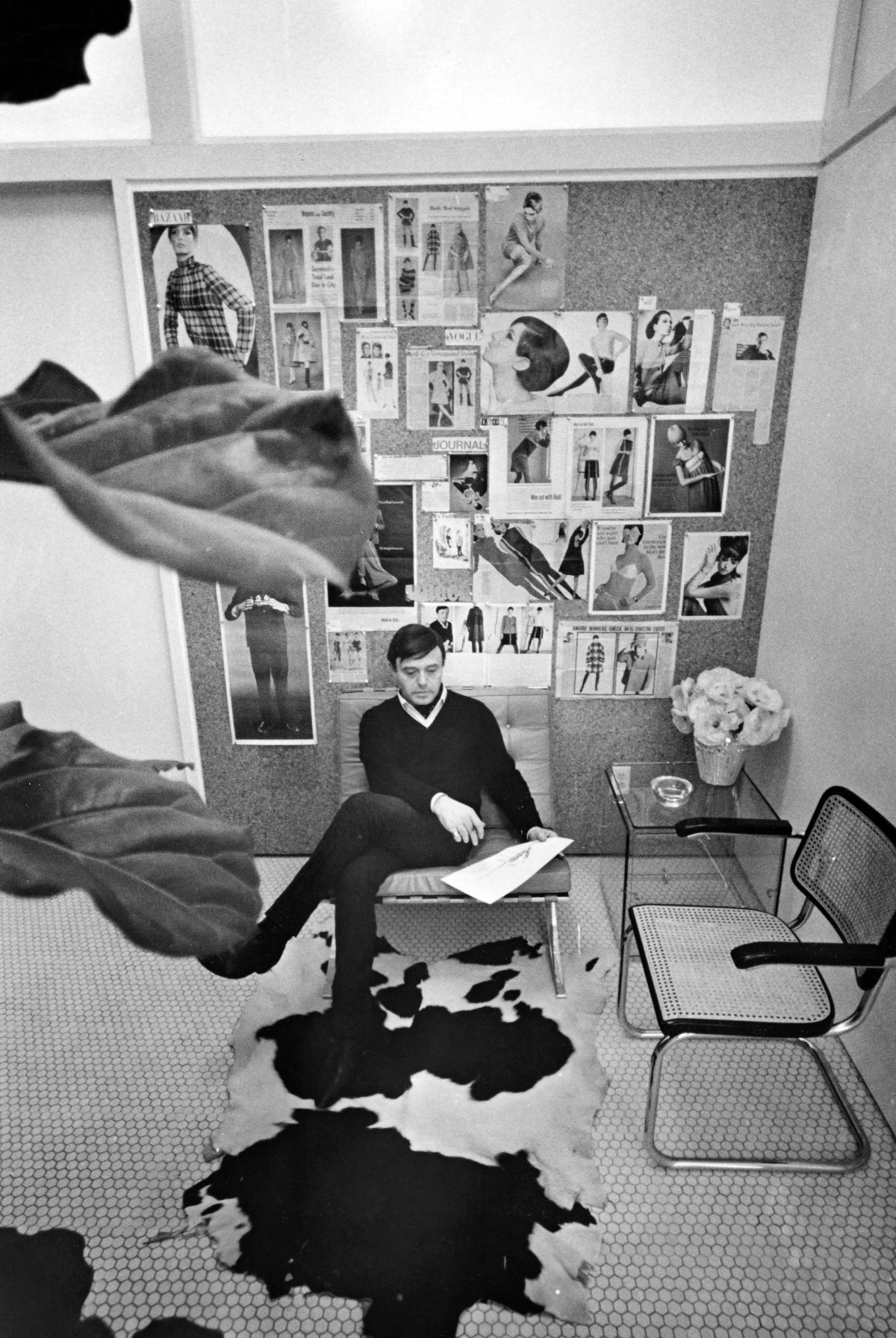
© William Claxton
Rudi Gernreich in his office in LA 1966
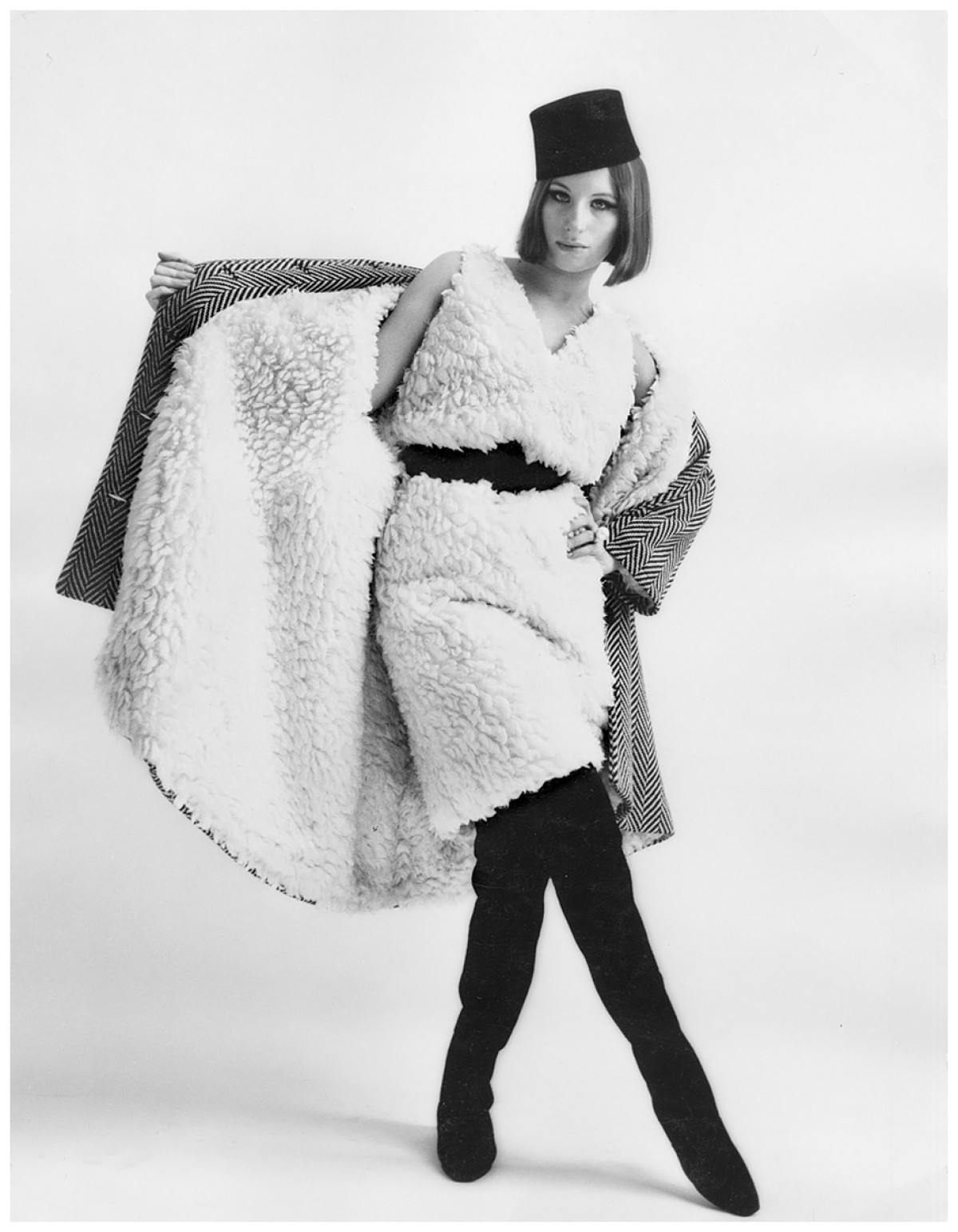
© Rudi Gernreich
Barbra Streisand in Rudi Gernreich fashion
Even the Vatican had words to say about his fashion designs. Pope Paul VI declared him to be an enemy of the Church. Soviet critics talked of the decline of morality in the United States, and various countries banned the monokini and even arrested wearers. And yet it was included, with the Bible and the Pill, in a time capsule in 1965. Gernreich was also able to capitalize on the public outcry through television appearances and newspaper interviews. In 1967 he made the cover of Time Magazine.
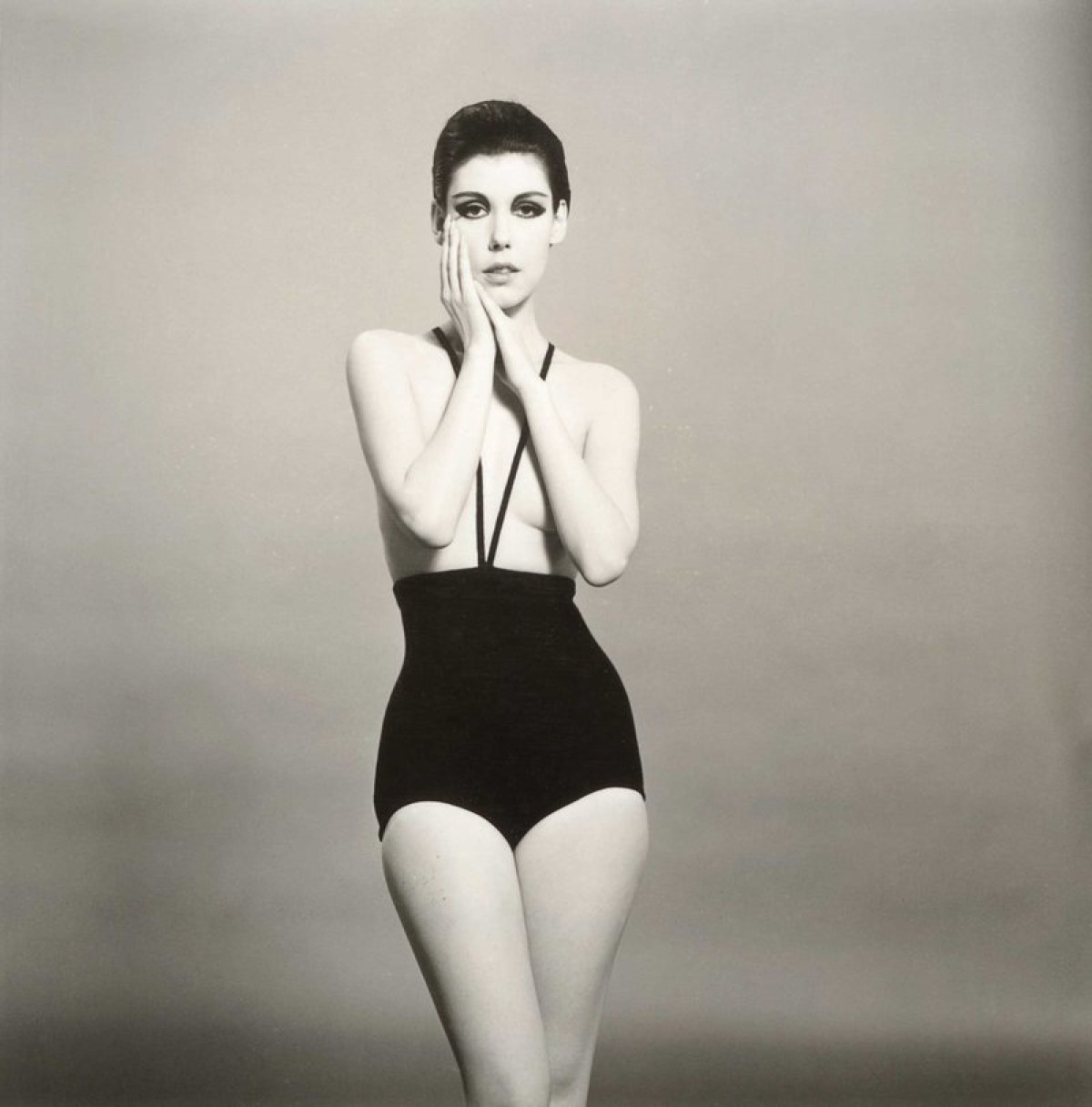
© William Claxton
Monokini
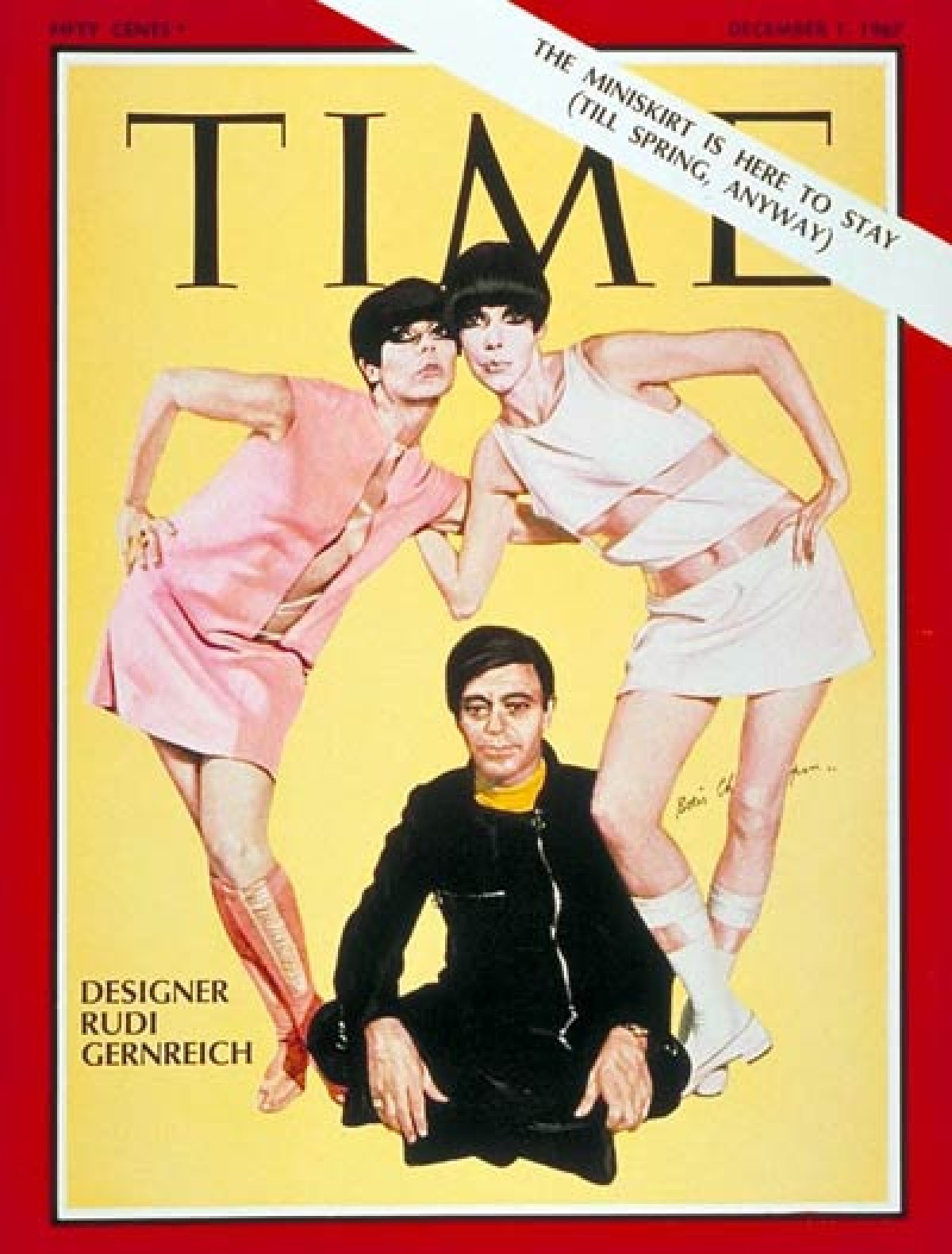
© Boris Chaliapin © Time USA
Time Magazine 1967
In the 1970s he concentrated on the creation of unisex fashions and the “total look,” in which hairstyle, makeup, and all accessories were coordinated with the clothing. He once explained his motivation for gender-neutral fashion by stating that he had designed the military look in the late 1960s in response to designers who were making “Scarlett O’Hara dresses,” which he saw as insulting to women at a time when they were demanding the same rights as men.
The caftans he exhibited at Expo 1970 in Osaka recalled the “reform” dresses of turn-of-the-century Vienna. The official motto of the exhibition was “Progress and Harmony for Mankind.” Gernreich claimed to design clothing that was comfortable rather than accentuating the shape of the body. One way of doing this was with colorful abstract patterns. His conception of unisex fashion also included shaving the head and entire body in order to further emphasize the blurring of gender boundaries. He believed that gender-neutral clothing would allow individuals to express themselves without being constrained by social rules.
“People will try to say that I want to make women look masculine. To me, the only respect you can give to a woman is to make her a human being. A totally emancipated woman who is totally free.”
Gernreich was able to implement his futuristic fashion visions in the 1970s with his design of the uniforms for the Moonbase Alpha astronauts in the television series Space: 1999.
In 1985, his “pubikini,” a tanga that only partially covers the pubic hair, once again caused a scandal. In fact, he had already withdrawn from the fashion business in the 1970s, instead designing furniture and household items, or even selling soup to gourmet restaurateurs like the Austrian chef Wolfgang Puck. But he was still to be seen standing up for equal treatment.
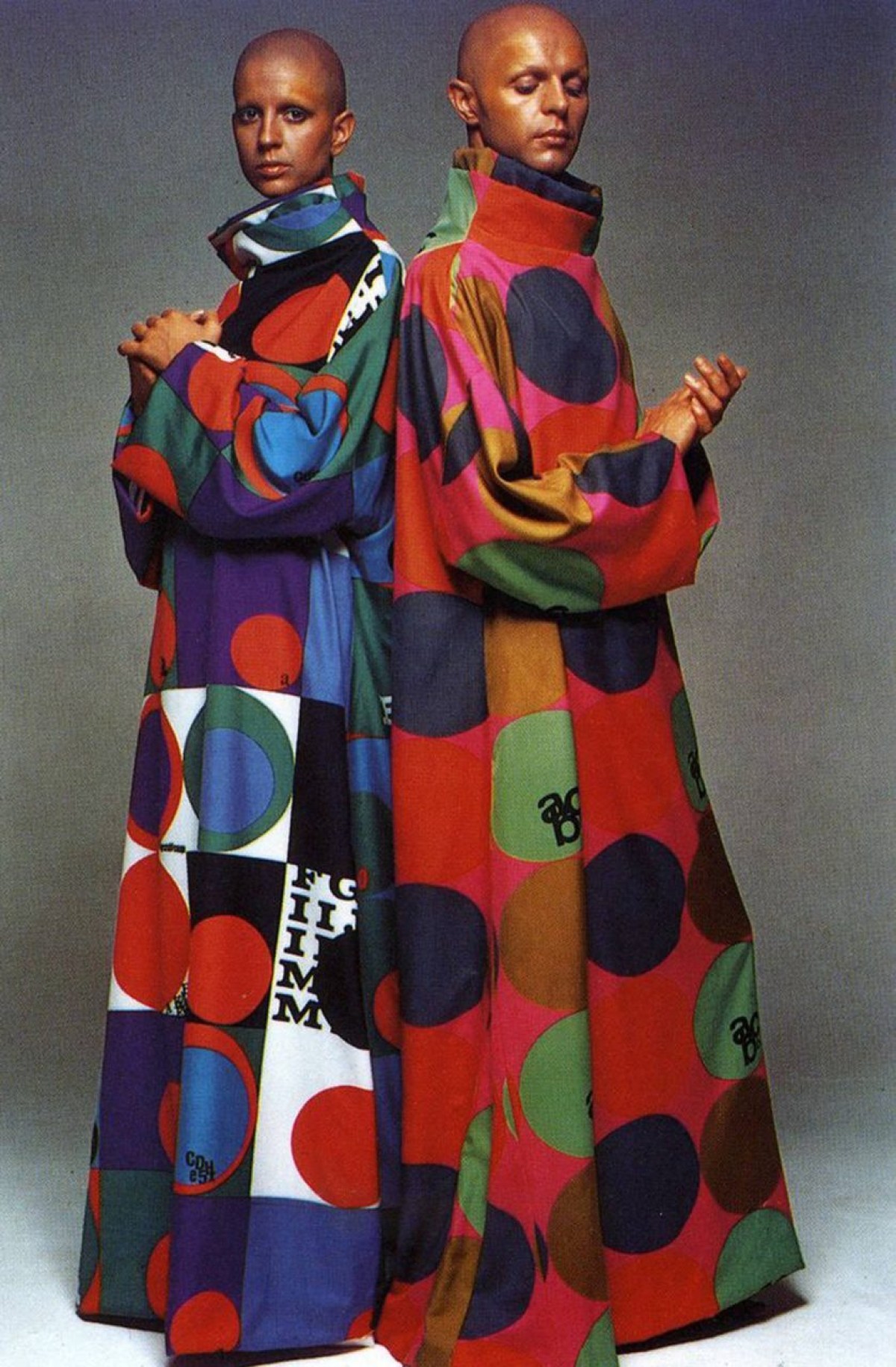
© Rudi Gernreich
The Kaftan as the unisex fashion of the future
He also combatted the stigma of mental disease and supported the election of Tom Bradley, LA’s first Black mayor.
His relationship to Austria remained equivocal. “Austria has officially paid the slightest attention to my existence - except for the time when we were all thrown out of the country.” It was only after he was diagnosed with lung cancer that he began to write down his childhood memories in German, a language he had refused for decades to use. In Vienna, the city where he was born and spent his youth up, he felt like a stranger.
Rudi Gernreich died on April 21, 1985, in a hospice in Los Angeles. His artistic estate of around 1,000 objects, including numerous articles of clothing, designs and fabric samples, furniture, press cuttings, and notebooks, went to the Fashion Institute of Design and Merchandising in Los Angeles. His personal estate is in the archive of the University of California.
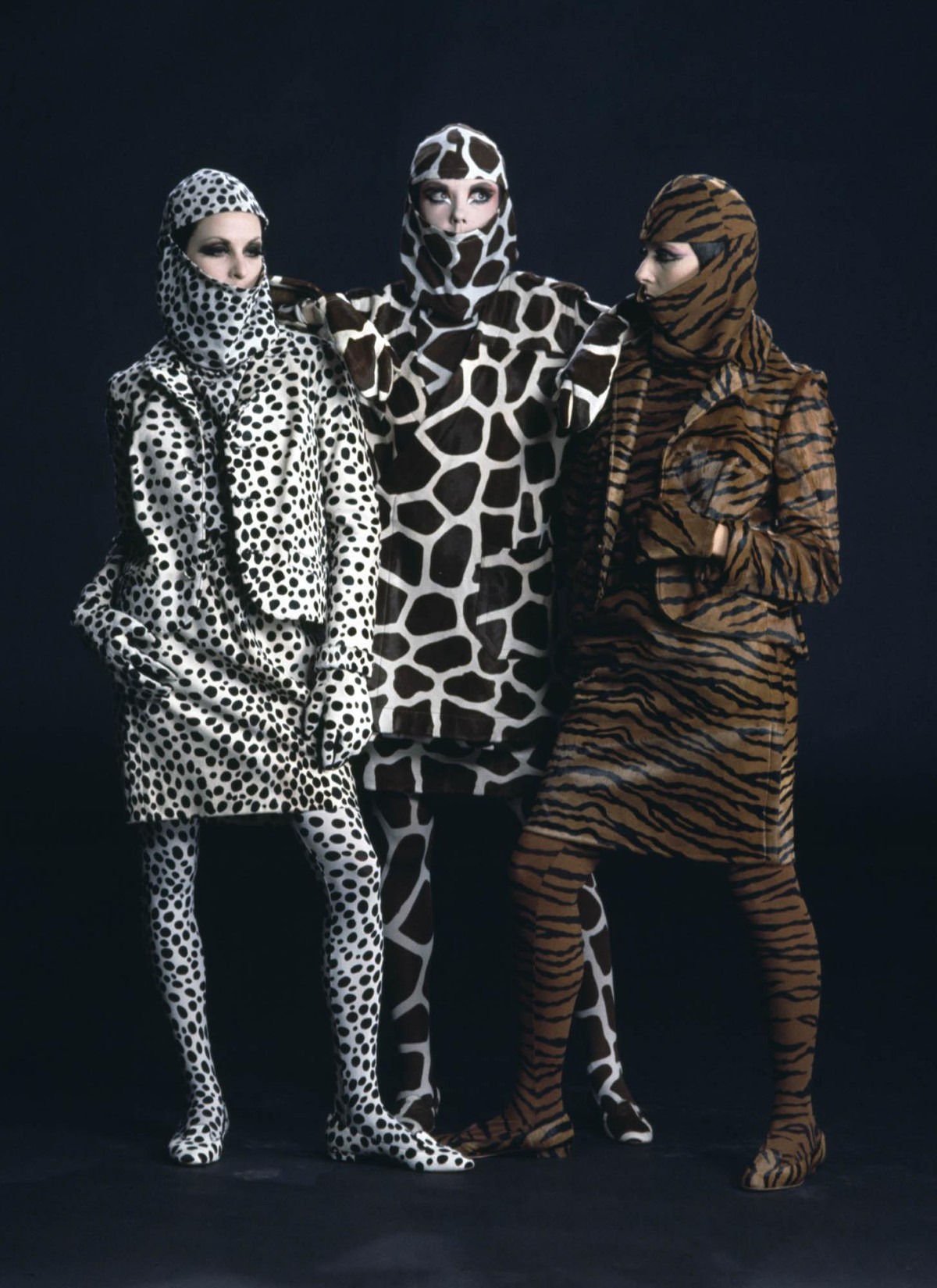
© Rudi Gernreich
Rudi Gernreichs Total Look
He and his longstanding partner Oreste Pucciani, professor of French literature at UCLA, left their assets and the trademark Rudi Gernreich to the American Civil Liberties Union as a signal of their lifelong commitment to justice. Thanks to these resources, the ACLU has succeeded on several occasions in defending LGBTIQ rights in court.Rudi Gernreich devoted his entire life to the belief that fashion should function as a liberating force. It should challenge conventional ideas of beauty, identity, and gender. The body should be celebrated and not suppressed or artificially forced into a particular shape. The continued relevance of his ideas can be seen today, for example, in discussions on Instagram.
While there are countless pictures of shirtless men on the platform, women’s nipples are censored. He fought this sexualization by means of fashions that no longer reduced women to their bodies, sexuality, or reproductive function. He said during the presentation of the monokini that he wanted to make a statement about freedom, not sexuality. The inscription on his grave is also typical:
“Where, when, or whatever - in the end it is always about human freedom.”